A catalytic converter is cut out in under two minutes. Replacing it costs four figures.
Cat theft targets the rhodium and palladium inside — hybrids worst of all. A bolted guard turns a two-minute cut into a job thieves abandon.
Catalytic converter lock: the short version
By Stephen Hall, Data lead, Swift AssistA catalytic converter lock is a steel cage, plate or cable shield bolted around the converter in your exhaust. Thieves cut converters out in about two minutes with a battery saw to sell the precious metals inside. The guard blocks saw access and turns a quick, quiet theft into a long and conspicuous one.
- Read this before you buy
- Recorded catalytic converter theft has collapsed. It fell roughly 98% between 2021 and 2024.
- The numbers
- 6,909 recorded thefts in 2021 against 150 in 2024, across 30 police forces that responded to a freedom of information request
- Why it fell
- The rhodium price crash, a national asset database, forensic marking, and enforcement of the Scrap Metal Dealers Act
- So is a guard worth it?
- For most drivers, no longer. For a small number of models it still is — see below.
- Typical price
- £60–£200 fitted
What actually happens
Catalytic converters contain small amounts of rhodium, palladium and platinum — rhodium alone has traded at several times the price of gold in recent years. Thieves jack a car up on the street or driveway, run a battery saw through two pipes, and are gone inside two minutes with a part worth hundreds in scrap. The owner inherits a £1,000+ replacement, weeks off the road, and often an insurance claim that costs the excess plus years of higher premiums.
Hybrids are targeted hardest — their cats run cooler and corrode less, so the metal content stays high. Toyota Prius, Auris and Honda Jazz owners see repeat attacks: some cars have lost two or three cats. Height helps too: SUVs and vans offer crawl space without jacking.
Background: the theft and collision patterns above draw on our own analysis of official records — explore the vehicle crime data and methodology.
How does a catalytic converter lock work?
A catalytic converter lock is a steel cage, plate or cable shield bolted around the converter in your exhaust. Thieves cut converters out in about two minutes with a battery saw to sell the precious metals inside. The guard blocks saw access and turns a quick, quiet theft into a long and conspicuous one.
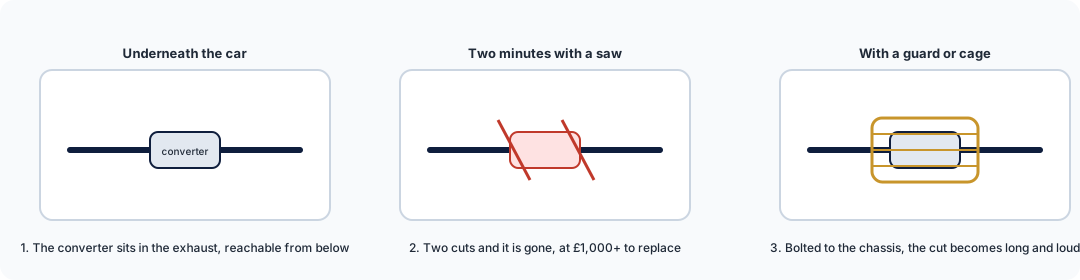
- 1Why converters are targetedCatalytic converters contain small amounts of rhodium, palladium and platinum. Rhodium alone has traded at several times the price of gold in recent years, so a converter is worth a few hundred pounds as scrap and costs the owner £1,000 or more to replace.
- 2How the theft happensThe car is jacked or the thief slides underneath, then a cordless reciprocating saw cuts the pipe either side of the converter. Higher vehicles and older hybrids are targeted first: more clearance underneath, and more recoverable metal in the unit.
- 3What the guard doesCage designs wrap the converter in aircraft cable or steel bars; plate designs shield the underside. Both bolt to existing chassis points with tamper-resistant fixings, so the saw cannot reach the pipe without first defeating hardened steel in an awkward position.
- 4Pair it with noiseGuards buy time, and a tilt-sensing alarm converts that time into attention: it triggers as the car is jacked, before the saw starts. Forensic marking adds a third layer, making the unit harder to sell on.
What it does not do
Most pages about this product only tell you the good part. These are the objections raised by owners and locksmiths, and they are fair ones.
The crime this product exists for has largely gone away
Auto Express asked all 48 UK police forces for their figures under freedom of information. Across the 30 that responded, recorded catalytic converter thefts fell from 6,909 in 2021 to 150 in 2024 — a fall of about 98%, corroborated by the National Police Chiefs' Council. South Yorkshire went from 850 recorded thefts to five. Several pages currently ranking for this search still open by telling you thefts are rising. They are not.
Why it collapsed, and why that could reverse
Rhodium, palladium and platinum prices fell sharply from their peak, which removed most of the money. A national asset database, wider forensic marking and enforcement of the Scrap Metal Dealers Act did the rest. Precious metal prices are volatile, and the trade has revived before — so this is a market that has gone quiet rather than a problem that has been solved permanently.
Where a guard still makes sense
Older hybrids with high ground clearance remain the exception: more recoverable metal and easier access underneath. If you own one, and particularly if your local force is one of the areas where thefts have not fallen as far, a guard is still a reasonable purchase. For most other vehicles the money is better spent on the things that address theft methods still in use.
Guards buy time, and the tools have moved on
Cage and plate designs resist a reciprocating saw, which was the standard method. Owners have reported determined thieves defeating a fitted guard with an angle grinder in around ten minutes, and portable jaw cutters now exist. A guard makes the job long and conspicuous rather than impossible.
Check the servicing consequence before fitting
A guard bolted across the exhaust affects access for emissions testing and exhaust work. Ask your garage what it means for MOT day and for any future exhaust repair, because that conversation is easier before the guard is on the car.
What to buy — the checklist
- ✓Guard plate or cage bolted through existing chassis points — tamper-proof bolts, no drilling into the car
- ✓Model-specific guards beat universal clamps where available — check your exact model and year
- ✓Cable-cage designs (CatClamp style) wrap the pipes either side — fitting is harder for thieves to plan around
- ✓A tilt-sensing alarm is a strong pairing: the jacking itself triggers it before the saw starts
- ✓Marking kits (forensic etching) make a stolen cat traceable — scrap dealers must record sellers' identities under the Scrap Metal Dealers Act, and marked parts are harder to sell on
Ad — we earn commission on the links below. When you buy through them we receive a commission from the retailer, at no extra cost to you. It changes nothing about what appears here: the checklist above is written first and the links are added afterwards.
Where to start looking
Cable cage: wraps the cat
Aircraft-cable cage around the converter — the hardest design to saw around.
~£150 · See options →
Guard plate for hybrids
Model-specific shields for the most-targeted cars.
~£120 · See options →
Tilt alarm pairing
Triggers on jacking — before the saw comes out.
~£30 · See options →
Searches, not endorsements of a single listing — compare whatever you find against the checklist above.
What changes once you own it
The two-minute crime becomes a twenty-minute one, on your driveway, under a screaming tilt alarm — and thieves doing cat runs are choosing between your guarded car and the unguarded identical model two streets over. For hybrid owners especially, one fitting ends the repeat-victim cycle: the £60–200 guard is a tenth of one replacement cat.
Asked before buying
Which cars are most at risk of cat theft?
Older hybrids top every force's list — Toyota Prius and Auris, Honda Jazz and CR-V — because their converters hold more recoverable metal. High-clearance SUVs and vans follow, since thieves can slide under without jacking.
Will a guard affect the exhaust or MOT?
Properly fitted guards bolt to the chassis and never touch the exhaust system itself, so heat, flow and MOT inspection are unaffected. Tell the tester it's there — they see them routinely now.
Does insurance make a converter guard pointless?
Converter theft is usually covered as theft-of-parts, but you still pay the excess, your discount is affected unless it is protected, and premiums rise at renewal. Repeat victims can struggle to stay insured at all. The guard exists to keep you out of that cycle entirely.
Is catalytic converter theft still a problem in 2026?
Far less than it was, and the change is dramatic rather than gradual. Auto Express obtained figures from police forces under freedom of information: across the 30 forces that responded, recorded thefts fell from 6,909 in 2021 to 150 in 2024, a fall of roughly 98%, and the National Police Chiefs' Council reports the same direction. South Yorkshire recorded 850 in 2021 and five in 2024. Several pages ranking for this search still tell you thefts are on the rise; that was true in 2021 and is not true now.
So should I still buy a catalytic converter guard?
For most drivers, probably not any more — the money is better spent on the theft methods still in use, such as keyless relay and diagnostic-port attacks. The exception is older hybrids with high ground clearance, which remain the most targeted vehicles and are worth protecting if you own one. It is also worth checking your own force area, because the fall has not been uniform.
Why did the thefts fall so far?
Mainly money. Rhodium, palladium and platinum prices fell steeply from their peak, which took most of the profit out of it. A national asset database, wider forensic marking and enforcement of the Scrap Metal Dealers Act — which requires dealers to verify seller identity and pay non-cash — did the rest. Metal prices are volatile, so the trade could revive.
Will a guard stop a determined thief?
No, and nobody should tell you otherwise. Cage and plate designs were built against the reciprocating saw, which was the standard method. Owners have reported a fitted guard being cut off with an angle grinder in about ten minutes, and portable cutting equipment has moved on. A guard makes the job long, loud and awkward — which was always the actual mechanism.
How this page is funded. Some links here go to Amazon, and as an Amazon Associate we earn commission from qualifying purchases, at no extra cost to you. It changes nothing about what we recommend: the checklist above is written first, the links are added afterwards, and we hold no stock of this product and take no payment for placement. Where a product does not deserve a recommendation, we say so.
Related on Swift Assist
Vehicle crime in your town
Police-recorded crime around 100+ UK town centres, updated monthly — see the risk this defends against.
Read more →Locking wheel nuts
Wheel theft leaves cars on bricks and owners with a four-figure bill. One keyed nut per wheel removes your car from the shopping list.
Read more →Dashcam (parking mode)
A dashcam with parking mode is a witness that never blinks — for collisions, car-park hits and theft attempts alike.
Read more →Need this data for your own work?
Site and junction reports from £95, next working day. Free for community groups, campaigners and journalists.